
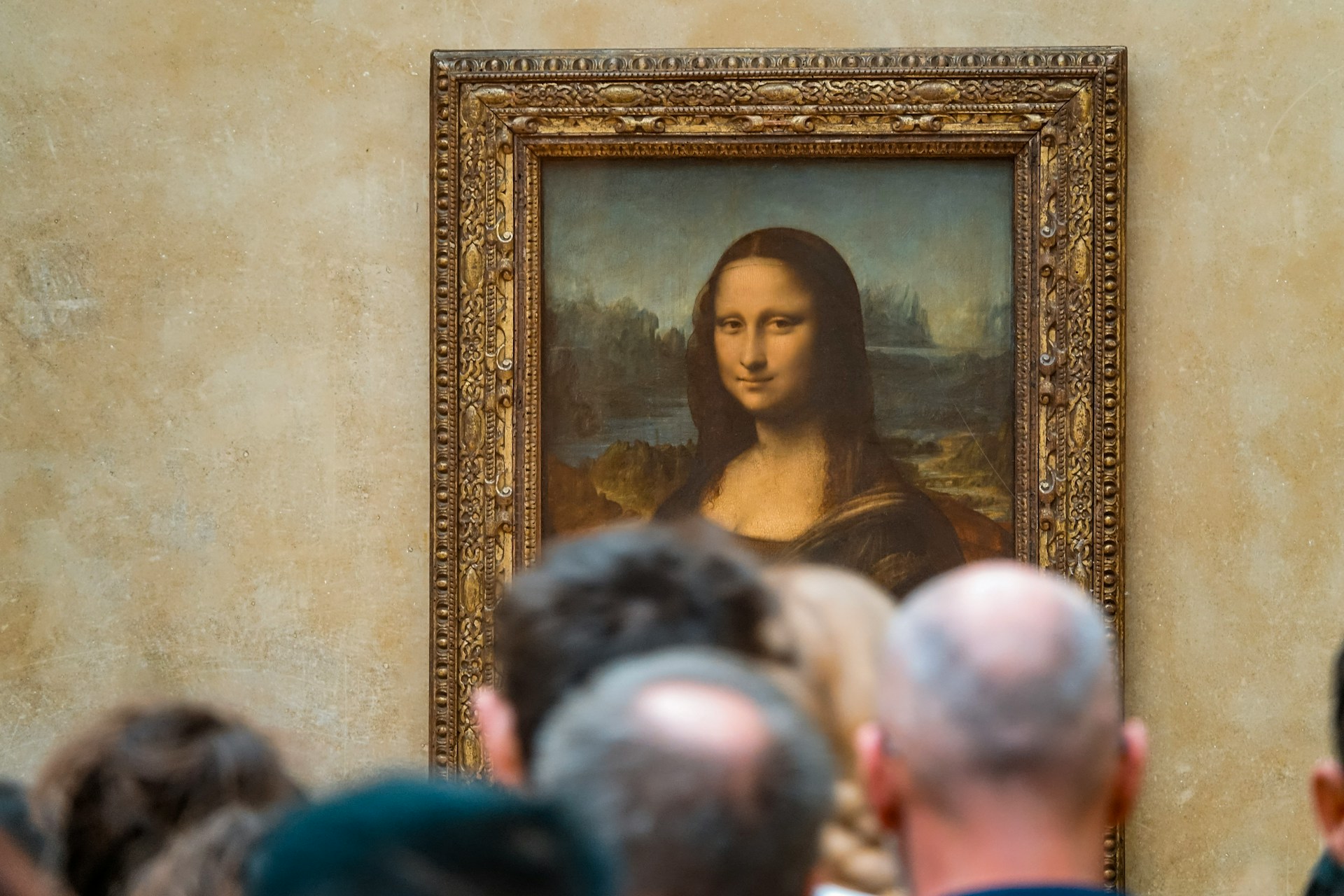
I wonder how Leonardo da Vinci would’ve felt knowing that centuries later, scientists would be trying to decipher the mystery of Mona Lisa’s smile—and that one of them, Luis Martinez Otero, may have actually cracked it. Was she in a tiff with Leonardo? Was she just shy?
According to science writer Ewan Callaway in New Scientist (2009), Otero’s research shows that “different cells in the retina transmit different categories of information or ‘channels’ to the brain. These channels encode data about an object’s size, clarity, brightness and location in the visual field.”
So what does that mean for Mona Lisa’s famously elusive smile? Otero put it simply: “Sometimes one channel wins over the other, and you see the smile. Sometimes others take over—and you don’t.”
Whatever the mystery behind this famed portrait, we can’t deny the fact that smiles can arouse certain emotions. The question is, are all smiles made equal? Do they all convey joy? Not so, according to our research.
Crinkling Smile

How you can you tell the difference between a genuine smile, a fake one and creepy car salesman smile? Answer: It’s all in the eyes. A sincere smile involves more than the mouth—it’s reflected in the entire face. The classic crinkling around the eyes that occurs when someone smiles is a good sign that it’s a genuine grin (Pease & Pease, 2004). An insincere smile won’t go beyond a person’s mouth.
Tight-lipped Smile

A tight-lipped smile says, “I may be smiling, but I don’t really like this…or you.” When someone gives you this type of smile, they are likely feeling really uncomfortable and tense.
Twisted Smile
A twisted smile usually says, “I’m being sarcastic.” Add an eye roll, and the message is unmistakable. It’s part smile, part sneer—a half-smirk that softens the bite of scorn while still making the derision crystal clear.

Drop-jaw Smile

A drop-jaw smile says, “I am not really enjoying myself, but I am trying to pretend that I am.” A smile commonly used by people in photo shoots or commercials. If someone uses this smile while filming a hemorrhoid ointment commercial, you can probably safely assume it’s not a genuine one!
Sideways Smile
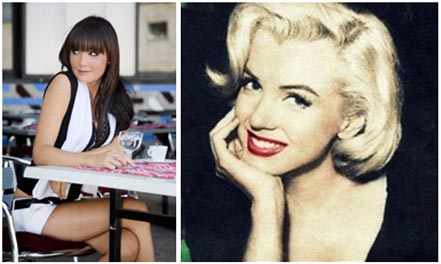
This smile, often used by celebrities like Kim Kardashian and Angelina Jolie (but made famous by Marilyn Monroe) says, “I am cute and coy, and you would love to get to know me.” Much like Mona Lisa’s smile, it has an air of mystery—and likely an intentional one. It’s a smile that draws people in with its innocence, and keeps their attention with its touch of sensuality.
Smiles sell, as does laughter. That’s why advertisements that use humor tend to produce more sales (Pease & Pease, 2004). A smile says, “I’m innocent and harmless; you can trust me,” while an angry face (or body) tends to be perceived as less trustworthy (Willis & Palermo, 2011). So a genuine smile can be a powerful sales tactic—but use it wisely!
Master the language everyone speaks but few truly understand. We’ve helped countless leaders and teams harness body language to communicate with impact. Book a free 20-minute coaching consultation to learn more.
References
Calloway, E. (2009). Mona Lisa’s smile a mystery no more. In NewScientist – Life. Retrieved May 8, 2014, from http://www.newscientist.com/article/dn18019-mona-lisas-smile-a-mystery-no-more.html#.U2uTXYZLHOg.
Pease, A., & Pease, B. (2004). The Definitive Book of Body Language. Australia: Pease International. Retrieved January 27, 2014 from http://e-edu.nbu.bg/pluginfile.php/331752/mod_resource/content/0/Allan_and_Barbara_Pease_-_Body_Language_The_Definitive_Book.pdf